Creating an inclusive LGBTQIA+ environment means ensuring that everyone, regardless of sexual orientation, gender identity, or gender expression, is treated with dignity, respect, and equality. LGBTQIA+ inclusion is an important part of building supportive communities, workplaces, educational institutions, and healthcare environments.
Understanding LGBTQIA+ identities can help reduce stigma, encourage respectful communication, and create spaces where people feel safe and accepted.
What Does LGBTQIA+ Mean?
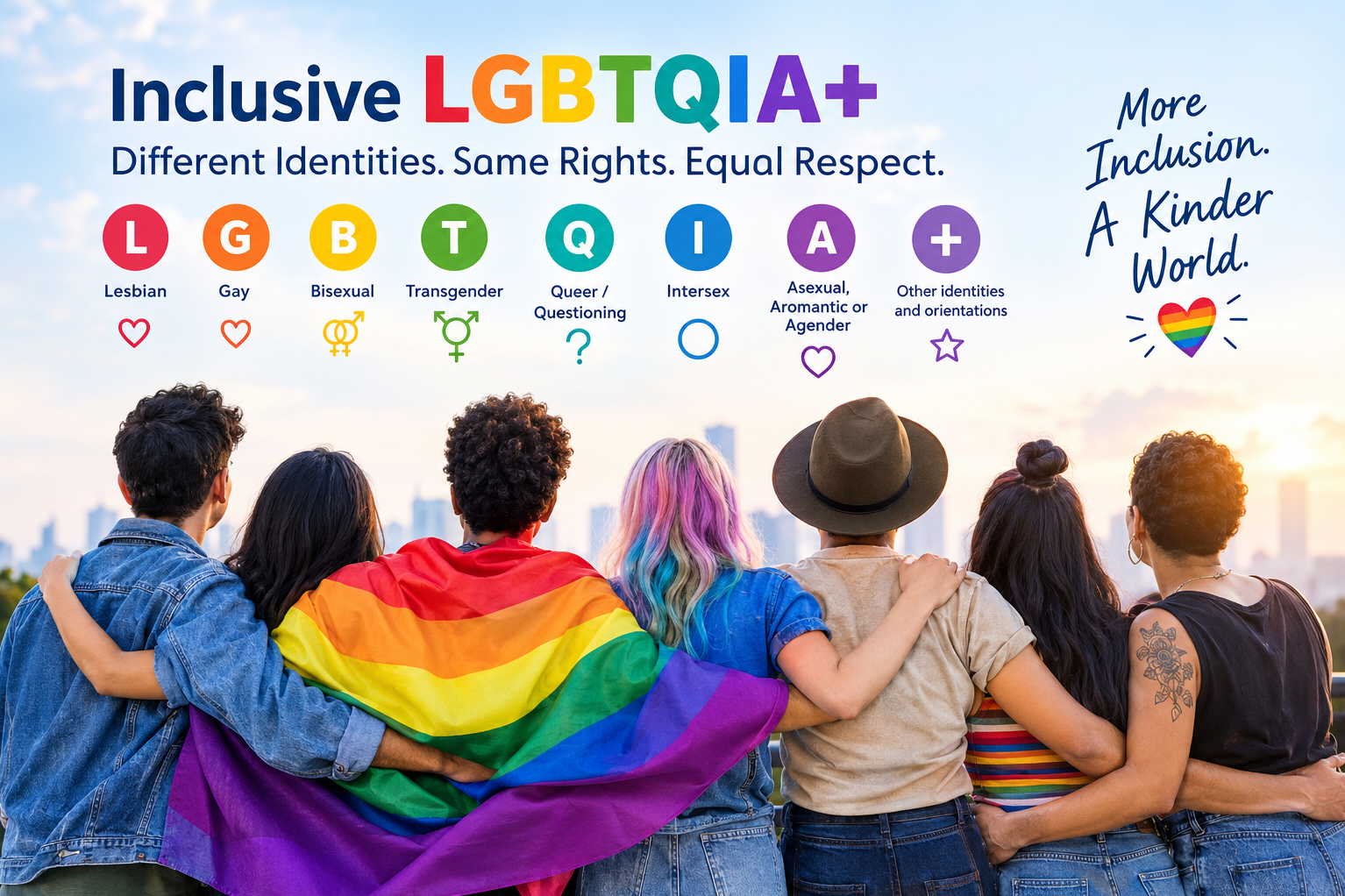
LGBTQIA+ is an inclusive acronym representing a range of sexual orientations, gender identities, and related experiences.
L – Lesbian: A woman who experiences romantic or sexual attraction toward women.
G – Gay: A person who experiences romantic or sexual attraction toward people of the same gender.
B – Bisexual: A person who may experience attraction to more than one gender.
T – Transgender: A person whose gender identity differs from the sex assigned at birth.
Q – Queer or Questioning: Queer can be an inclusive identity for people whose orientation or gender does not fit traditional categories. Questioning refers to someone exploring their identity.
I – Intersex: People born with variations in sex characteristics that do not fit typical definitions of male or female bodies.
A – Asexual, Aromantic or Agender: These terms describe different experiences relating to sexual attraction, romantic attraction, or gender identity.
+ – Plus: Represents other identities and experiences, including non-binary, pansexual, gender-fluid, and others.
What Is LGBTQIA+ Inclusion?
LGBTQIA+ inclusion means creating environments where LGBTQIA+ people can participate equally and feel respected and supported.
Inclusion may involve:
Using respectful and appropriate language
Respecting people's names and pronouns
Preventing discrimination and harassment
Providing equal access to healthcare, education, and employment
Protecting privacy and confidentiality
Listening to individual experiences without judgment
Creating policies that support diversity and equality.
Why Is LGBTQIA+ Inclusion Important?
Inclusive environments can help people feel safer, respected, and more comfortable being themselves. Lack of acceptance or discrimination can contribute to social isolation, stress, and barriers to accessing important services.
LGBTQIA+ inclusion is therefore not simply about awareness. It involves respectful practices, equal opportunities, and meaningful support.
For consultation, book an appointment on 08042752572
HIV Specialist in Mulund | HIV doctor in Mulund | HIV Specialist in Thane | HIV Specialist in Bhandup
Keywords